
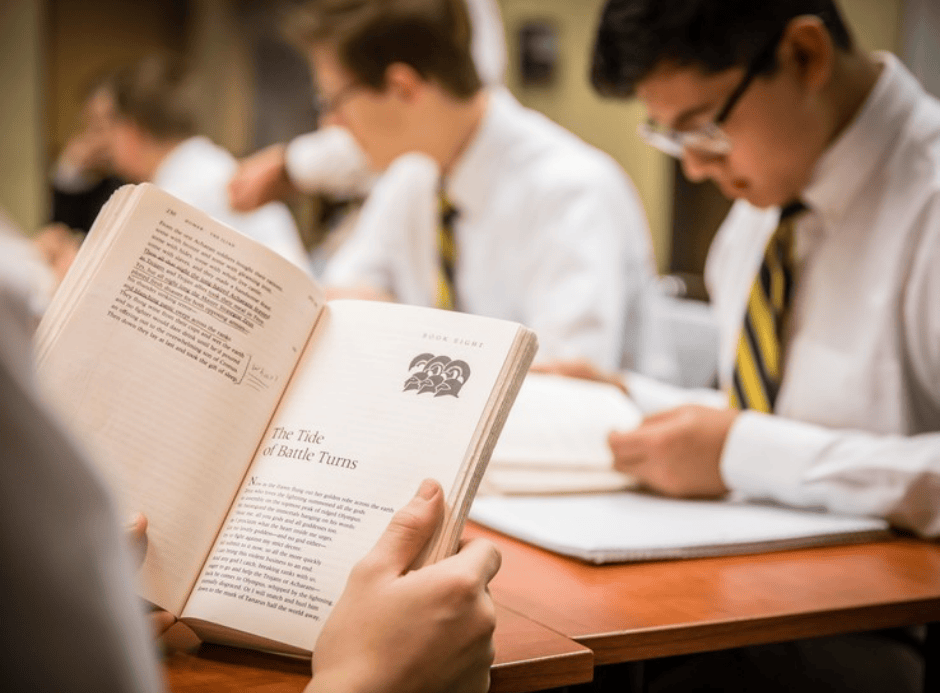
Classical Education
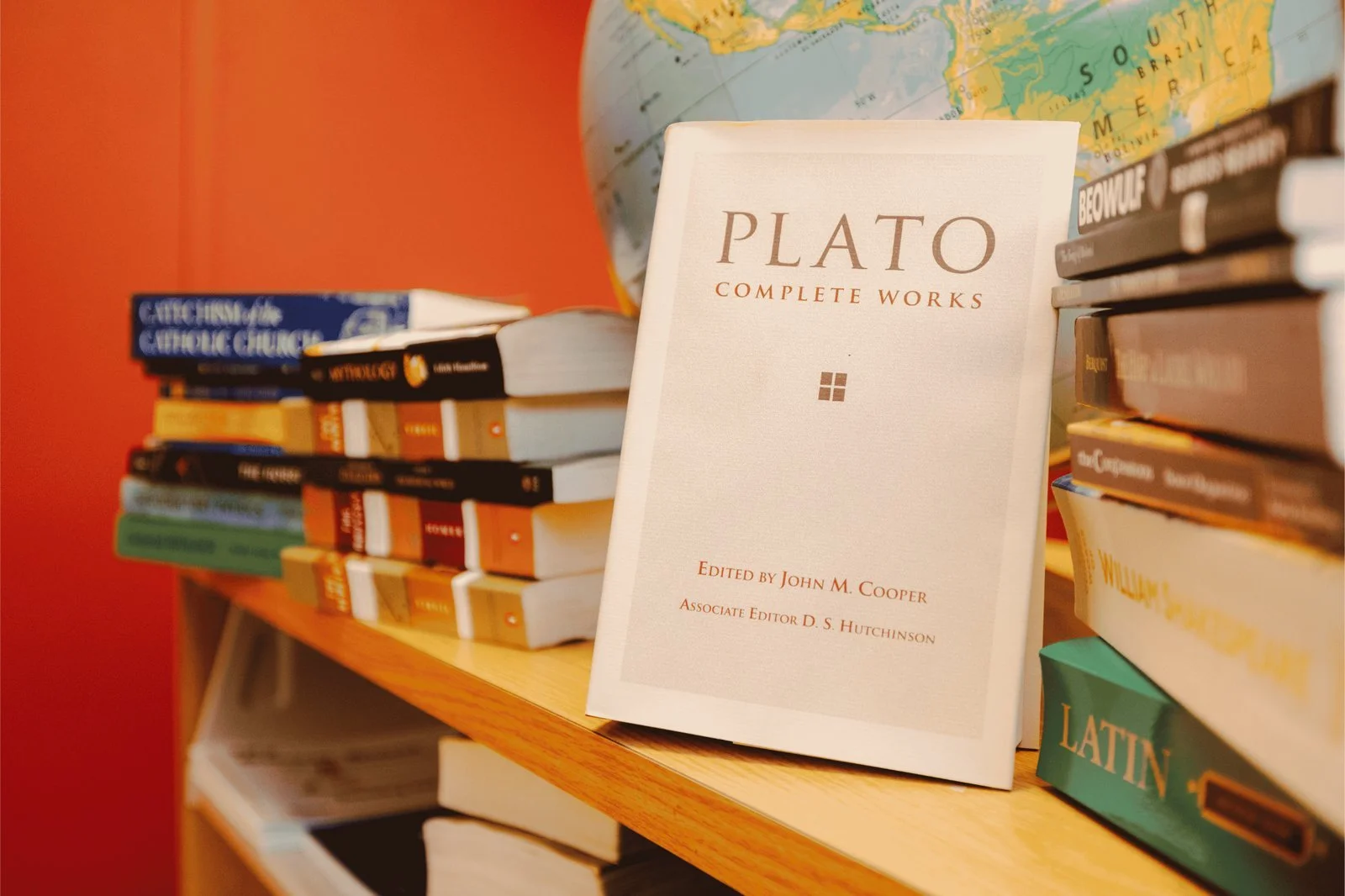
What Is Classical Education?
History
Our story begins in the Greco-Roman world. In the democratic polis (or city-state) of classical Athens, education was seen as crucial for shaping virtuous leaders and active participants in civic government. Thinkers like Socrates, the father of Western philosophy, emphasized the importance of questioning and dialogue in the pursuit of truth. His student, Plato, envisioned an ideal education system focused on developing the mind to instill a strong sense of civic virtue in the student. Building upon these ideas, Aristotle, known by later generations as The Philosopher, further developed this theory of education and refined some of the key terms of classical education, terms like grammar, dialectic, and rhetoric.
The Roman Empire, with its emphasis on law, order, and oration, readily adopted the Greek model. Roman educators incorporated their own values into this system, centering upon family and home as the locus of learning rather than the academy and emphasizing practical skills. Like the Greeks across the Ionian Sea, the Romans believed education should prepare students for a life of civic virtue (or pietas).
After the decline of the Roman Empire in the west and the subsequent collapse of secular education, classical education found a safe haven in Christian monasteries, where monks preserved ancient texts to ensure the survival of classical knowledge. These monks ran cathedral schools and monastic schools where they applied the classical method of education in teaching children. Thus, Christendom inherited the wisdom of antiquity, and in turn, classical education became synonymous with Christian education.
The classical model of education was the standard model until the modern period, when education was reenvisioned and repurposed first as a means “to build national identities” and then as a means for “economic development in Great Britain and across Europe and the United States before and during the Industrial Revolution.”
But our story doesn’t end with the disappearance of classical education. The 20th century witnessed a renewed interest in this timeless model. Pioneers like Dorothy Sayers, a renowned British mystery writer, and Leigh Bortins, an American educator, spearheaded this movement. Sayers, in her influential essay “The Lost Tools of Learning,” argued for a return to the core principles of classical education, emphasizing the importance of logic, clear thinking, and the study of great literature. Inspired by Sayers, Leigh Bortins and other leaders in the classical education movement have revitalized classical education.
Philosophy
To quote Andrew Kern, founder of the CiRCE Institute: “Education is the cultivation of wisdom and virtue, and it is accomplished by nourishing the soul on truth, goodness, and beauty.” This is the heart of classical education. The classical model of education rests on a core philosophy that emphasizes the pursuit of truth—universal and timeless truths that transcend generations and cultures. This philosophy translates into a structured curriculum designed to cultivate wise and virtuous individuals. The classical curriculum is often divided into two categories of learning: the trivium and the quadrivium.
The trivium, meaning “the three ways” in Latin, forms the foundational This arts focuses on mastering the fundamental tools of language and thought:
Grammar: This is not merely about memorizing sentence structures. Yes, classical grammar delves into the mechanics of language, analyzing word parts, sentence construction, and the logical relationships between words and ideas, but ultimately, grammar involves the accumulation of knowledge through memorization of the rudimentary facts of any subject.
Dialectic: Moving beyond the, dialectic focuses on the art of reasoned discourse. Students learn to analyze arguments, identify logical fallacies, and construct arguments of their own. This skill is essential for navigating complex ideas, evaluating information critically, and engaging in meaningful dialogue.
Rhetoric: Having mastered the tools of language and reasoning, students move on to rhetoric reasoning, the art of effective communication. They learn to use language persuasively and elegantly, tailoring their arguments to different audiences. To quote Leigh Bortins: “An educated person is not someone who knows something, but someone who can explain what they know to others” (The Core, Chapter Four).
Once a strong foundation is established in the trivium, students progress to the quadrivium, meaning “the four ways.” This arts focuses on the mathematical and scientific disciplines:
Arithmetic, Geometry, Music, and Astronomy: The quadrivium emphasizes understanding the underlying principles and relationships within each discipline. Through these subjects, students cultivate a sense of order and beauty in the world and hone their ability to reason through abstractions.
The trivium and quadrivium work together to guide students toward the goal of education: to know God, to love Him, to imitate Him, to be like him. Furthermore, by mastering the classical skills of learning, students are empowered to grapple with the great ideas that have challenged humanity for centuries. They learn to analyze complex texts, identify flawed arguments, and formulate their own conclusions. This emphasis on eternal truth ensures that classical education equips students not just with the skills to succeed in the here and now but also with the intellectual foundation to navigate the ever-changing world around them.
Methodology
Classical education employs a specific methodology that’s aimed at fostering a love of learning and equipping students with the tools to become lifelong learners. Or, to quote Leigh Bortins once more, “The classical approach trains the student to become a thorough and capable learner, rather than focusing on training for a single job skill.” This methodology can be broadly categorized into three key arts of learning that mirror the trivium:
1. The Art of Grammar
Emphasis on Memorization: We have a natural ability to absorb large volumes of information through repetition. (Just look at how quickly toddlers pick up their native language!) Classical education capitalizes on this by employing techniques like recitation, songs, and chants to instill grammar skills and teach acts, historical timelines, and even classical poems or mottos. This creates a strong foundation of knowledge upon which future learning can build.
“The foundation of a classical education begins with parents teaching children the art of memorization and grammar studies. Some educators might dismiss rote memorization, but I argue that it is beneficial because it trains your brain to hold information. It is the most organic way of learning ever devised and goes hand in hand with the way we naturally relate to our children.”
Direct Instruction: Teachers provide direct instruction to students. Direct instruction is a teacher-directed method that uses explicit techniques to teach skills (in this case, the art of grammar). That’s not to say that the student’s needs aren’t considered, but the emphasis is on the impartation of foundational knowledge.
2. The Art of Dialectic
Emphasis on Analysis and Discussion: Students’ natural curiosity and questioning nature come to the fore. The classical methodology caters to this by transitioning from direct instruction to more open-ended discussions and Socratic questioning. Teachers guide students to analyze texts, identify logical fallacies, and engage in respectful debate. This fosters critical thinking skills and the ability to think independently.
Close Reading of Great Texts: Classical education prioritizes the study of “great texts”—enduring works of literature, philosophy, history, and science. Students engage in close reading, dissecting the meaning, purpose, and historical context of these works. This exposure to timeless ideas broadens their worldview and develops their analytical skills.
3. The Art of Rhetoric
Emphasis on Communication and Persuasion: Having honed their critical thinking and analytical skills, students using the art of rhetoric learn to communicate their ideas effectively. They explore different writing styles, practice persuasive arguments, and develop public speaking skills. This empowers them to not only think clearly but also to share their knowledge and perspectives with confidence.
The Importance of the Arts and Literature
The classical methodology recognizes the importance of the arts and literature in forging the well-rounded person. Music, drama, and visual arts are integrated into the curriculum, fostering creativity, imagination, and an appreciation for beauty. Additionally, the study of classical mythology, literature, and history not only provides historical context but also allows students to explore timeless themes and grapple with enduring human questions.
Written by:
Classical Conversations